Photo credit: Kit Leong / Shutterstock.com

Las Vegas Is Building Itself Into a Tech Powerhouse

Data centers, high-speed rail, a $2.3B entertainment sphere, a smart-city arena, and more— here’s what’s happening and what it means for real estate.


DATA CENTERS

Switch Is Doubling Down on Las Vegas — In a Big Way

If you’ve driven the 215 through the Southwest Valley lately, you’ve noticed them: those massive, striking buildings — red-and-gray, sharp-edged, impossible to miss. That’s Switch, and right now they are on one of the biggest expansion runs in the company’s history.

In June 2026, Switch made headlines when it purchased 53.6 acres along Decatur Boulevard near Silverado Ranch for nearly $86.2 million — adding to prior purchases of more than 300 acres in North Las Vegas’s Apex Industrial Park that totaled over $180 million combined. Clark County commissioners have also approved a new 56,788-square-foot data center on Warm Springs Road just west of Decatur.

So what exactly is Switch, and why does any of this matter to people who live here?


What Switch Actually Does

Switch calls itself the “Fort Knox of data.” It designs and operates secure facilities that store and protect massive amounts of digital information for major corporations. Local clients include MGM Resorts, Caesars Entertainment, and the City of Henderson. National clients include Google, eBay, and FedEx. As AI technology has grown, Switch has expanded into AI infrastructure and high-density computing — making Las Vegas a quiet but significant player in the global tech ecosystem.

Photo credit: Switch / Switch.com

Switch was founded in 2000 by Las Vegas native Rob Roy — yes, that’s his real name — based on his own patented technology. The company went public in 2017 raising $531 million, then was acquired by DigitalBridge for $11 billion in 2022. As of 2024, reports suggested a potential new IPO valued at roughly $40 billion — a figure that would likely be even higher today given how AI stocks have boomed.

To fuel its current expansion, Switch has borrowed heavily: $20 billion since 2024 to grow its campuses nationwide, followed by a $3.5 billion bond sale and a $2.6 billion syndicated letter of credit. The company is also building a brand-new 382-acre campus near Pittsburgh to serve the Eastern U.S. — yet Nevada remains its home base and its biggest bet.


THE REAL CONVERSATION

Is Switch Good or Bad

Across the country, communities are pushing back against data centers due to their massive power and water demands—resources already strained in Southern Nevada. Boulder City is opposing a new facility, Reno has paused approvals, and the Las Vegas Valley relies on drought-stricken Lake Mead for 90% of its water.

Is Switch part of the problem?

Not exactly. Switch operates differently than its peers:

  • Energy: Its 2-million-square-foot Las Vegas campus runs entirely on renewable energy from its own solar fields at Apex Industrial Park. Covering 275 NFL fields, these stations generate 179 megawatts. As a rare utility-scale generator, Switch has built 1 gigawatt of solar capacity across its campuses as of 2026.

  • Water: Instead of draining municipal drinking water, Switch uses a closed-loop system that recirculates water four times. This proprietary tech has saved over 155 million gallons in three years, supporting Switch’s commitment to be water-positive. Furthermore, Southern Nevada’s 2024 ban on evaporative cooling ensures future builds remain low-impact.

While the broader data center industry still faces valid criticism, Switch is a clear exception. The real narrative to watch moving forward is whether Nevada’s regulatory framework can evolve fast enough to protect state resources while balancing rapid tech growth.


HIGH-SPEED RAIL

Brightline West: Still Moving Forward — With Some Uncertainty

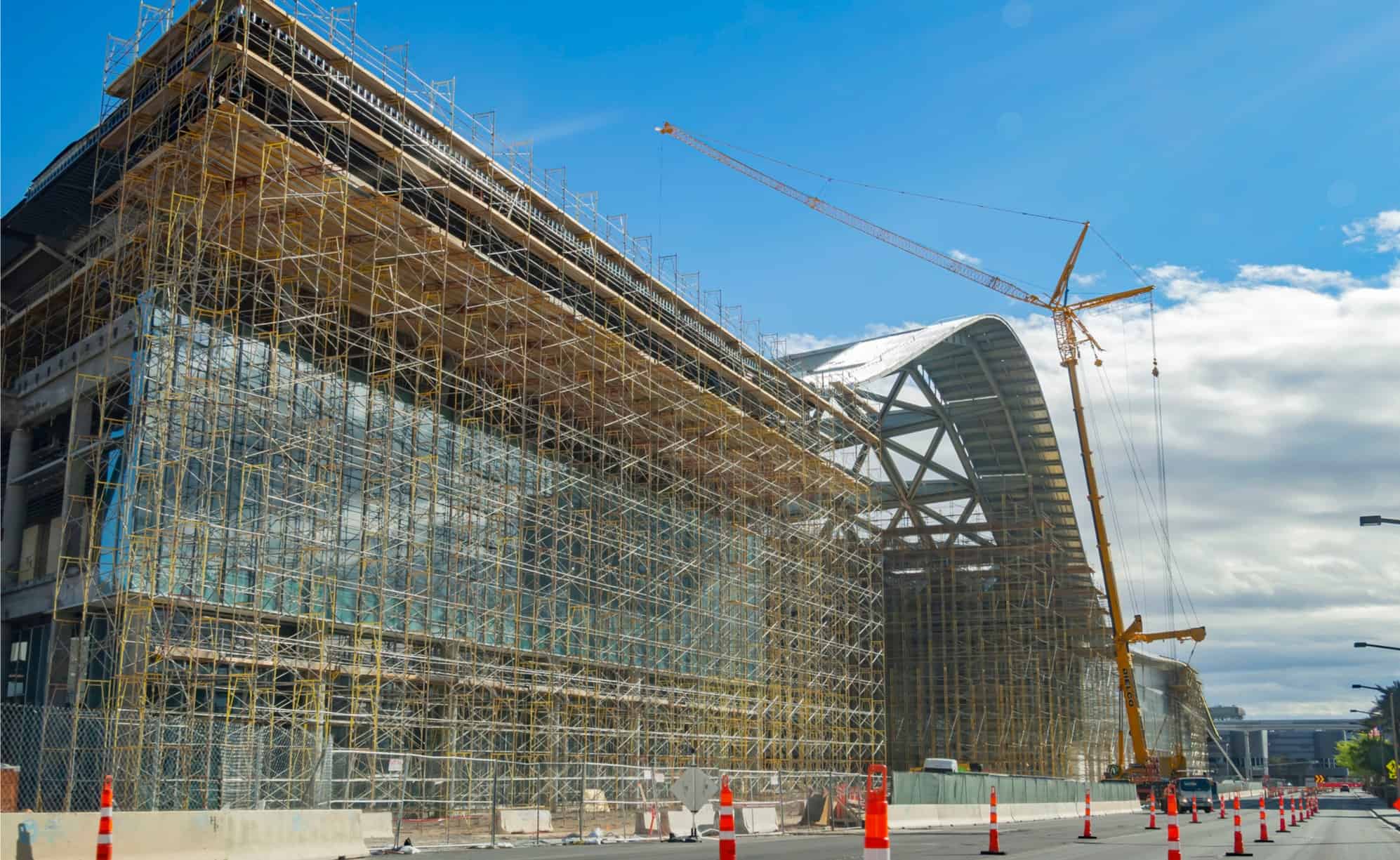
The Brightline West high-speed rail line connecting Las Vegas to Southern California remains one of the most ambitious infrastructure projects in Nevada’s history. The plan: 218 miles of electric rail running at up to 200 mph through the median of Interstate 15, getting passengers from Las Vegas to Southern California in about two hours and ten minutes.

Here’s where things stand as of mid-2026:

What’s been done: Surveying along the full 218-mile route is complete. The Las Vegas station parking garage near the I-15/215 interchange is taking shape. Field work, geotechnical surveys, and I-15 median prep have been active throughout Nevada and California. The first two of eight train sets are currently being manufactured. A concrete-tie production facility in North Las Vegas — dedicated entirely to the Brightline project — has been completed.

What’s still needed: Brightline West is awaiting a $6 billion federal loan, and is simultaneously pursuing a $4 billion banking consortium loan to fill the gap. The project’s estimated cost has risen sharply — from $9 billion to approximately $20.1 billion — driven primarily by rising construction market costs. The company already received a $3 billion federal grant and raised $2.5 billion in private activity bonds, but the remaining financing is the critical open item.

What About Brightline’s Florida Troubles?

Brightline’s existing Florida passenger rail operation is facing serious debt challenges — its auditor flagged doubt about the company’s ability to continue. However, Brightline West is a separate project with its own bondholder agreements and independent financing track. The company has stated that its bondholder arrangement “provides the necessary time to conclude construction contracting and financing activities.” The two projects share a parent company (Fortress Investment Group) but are structurally separate.

    Photo credit: Brightline

The original goal of opening in time for the 2028 Los Angeles Olympics was abandoned — the new target is late 2029. Major construction was originally planned to begin by early 2025, then shifted to April 2026. The project is active but the pace of full heavy construction depends on closing the remaining financing.

When completed, Brightline West would be America’s first privately operated high-speed rail line. For Las Vegas homeowners and residents, a direct rail connection to Los Angeles — and through Metrolink, to the broader Southern California metro — would be transformational for property values, tourism, and quality of life.


ENTERTAINMENT + TECHNOLOGY

The Sphere — Open, Operating, and Already Iconic

The Sphere opened September 29, 2023 — the most expensive entertainment venue in Las Vegas history. The specs set global records: 366 feet tall, 516 feet wide. Interior: a 160,000-sq-ft 16K LED wraparound screen, the largest and highest-resolution on Earth. Exterior: 580,000 sq ft of programmable LED panels, also the world’s largest. The sound system has 167,000+ speaker drivers with beamforming technology. 4D effects — wind and scent — are built in.

Residencies so far: U2, Eagles, Phish, Dead & Company, Backstreet Boys, No Doubt, Metallica, and Kenny Chesney. Immersive productions include Postcard from Earth and a 4D Wizard of Oz. It hosted the highest-grossing UFC event in history. A second Sphere is confirmed for Abu Dhabi; proposals are in discussion for Tokyo and the Washington D.C. area.

For real estate: the Sphere is a primary destination, not a side stop. That kind of anchor development has a measurable impact on surrounding property values and on Las Vegas’s position as a global draw.


SMART CITY DEVELOPMENT

Bleutech Park — A Hyper-Smart Sports Venue at the South Strip

Located at the south end of the Strip — adjacent to the future Brightline West station — Bleutech Park is a $6.75 billion “Hyper-Smart” multi-sports venue formally relaunched in February 2026. Real partners are now attached: Turner Construction, LaBella Associates (Architect of Record), and Walker Consultants on mobility planning.

The tech vision includes IoT, AI, autonomous vehicles, underground tunnels, eVTOL aerial taxis, kinetic-energy pedestrian walkways, and digital currency integration. Target: NBA-ready by Q2 2028. The first zone was slated for Clark County Commissioner review in early 2026.


CONVENTION INTRASTRUCTURE

Las Vegas Convention Center — Underground Tunnels and 1.4M More Sq Ft

Las Vegas welcomed 6.6 million business travelers in 2019. The Convention Center is investing to serve even more. The headliner: the LVCC Loop — an underground tunnel system by The Boring Company that moves attendees between halls in all-electric Tesla vehicles, free of charge. Las Vegas is the first and only convention destination in the world with underground passenger transit.

The West Hall expansion added 1.4M sq ft of new space for ~$980M. Phase 3 renovates the existing 3.2M sq ft. Together, these put Las Vegas in position to host the world’s largest conventions with infrastructure that matches its ambition.


TECH RELOCATION

Google’s Henderson Data Center — Big Tech Puts Down Roots

Google opened a $600M data center in Henderson — one of a very small number operated globally. It’s core internet infrastructure: the kind that powers Search, Gmail, Drive, and cloud services for millions of users daily.

It’s also part of a larger pattern. Nevada’s tax climate has made it an increasingly attractive alternative to California for major tech companies. Where companies go, high-paying jobs follow — and where those jobs go, housing demand follows. Henderson has been a direct beneficiary, and that pattern continues as more data center development arrives in the valley.


IMMERSIVE ENTERTAINMENT

AREA15 — The World’s First Immersive Entertainment District

AREA15 opened in September 2020 as the world’s first purpose-built immersive entertainment district — part art complex, part entertainment venue, part experiential retail. General entry to the district is free; individual experiences are ticketed separately.

Current anchors: Meow Wolf’s Omega Mart (a surreal choose-your-own-adventure hidden inside a bizarre supermarket), Universal Horror Unleashed (year-round haunt from Universal), and Interstellar Arc (Emmy-winning cinematic VR). In 2025, AREA15 expanded by 35 acres. In 2026, a dozen-plus new tenants arrive — including the Museum of Ice Cream opening July 3, 2026 as the brand’s largest location in the world.

AREA15 has been named the #1 immersive art destination globally by Blooloop and “Most Innovative Venue in the USA.” It draws visitors to Las Vegas specifically — not as a Strip afterthought, but as a destination on its own.


LOGISTICS & JOBS

Amazon Fulfillment Centers — Robots, Jobs, and a Growing Footprint

Amazon operates multiple fulfillment centers across the Las Vegas valley, each using its robotics systems — autonomous units that retrieve product shelves and deliver them to associates at ergonomic workstations for faster, higher-volume fulfillment.

Beyond the direct jobs, Amazon’s presence sends a signal: Southern Nevada has the land, infrastructure, and workforce to support large-scale logistics at a national level. That kind of confidence attracts more employers — which means more housing demand, which strengthens the broader real estate market.


THE BOTTOM LINE

Across all nine of these projects, a clear picture emerges: Las Vegas is building a more permanent economy. Tech infrastructure, world-class entertainment, smart city development, high-speed transit, and large-scale logistics are all arriving in the same window — not by coincidence, but because the foundation is here.

Las Vegas has always attracted money. What’s different now is that the money is building something that lasts — jobs, infrastructure, and long-term assets that shape property values for years to come.

If you want to talk through how any of these projects affects a specific neighborhood or your buying timeline, I’m here.

Community Contact